Way to cook Meat

Beef
Way to cook meat23 June, 2022
Methods of cooking meat include dry heat (roasting, broiling, pan-broiling, pan- frying, stir-frying and outdoor grilling) or moist heat (braising and cooking in liquid). Methods should be selected based on initial tenderness of the cut, desired quality characteristics of the resulting product, available cooking facilities and equipment, and the amount of time available for preparation.
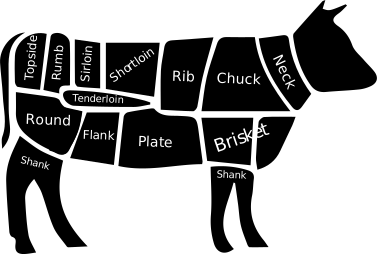
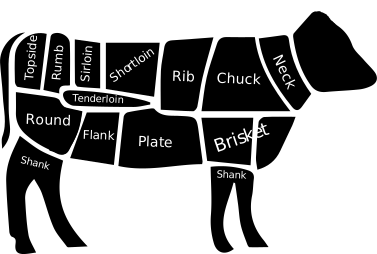
Tender cuts of meat, cooked by dry-heat methods, result in tender and juicy products. Less-tender cuts must be cooked for longer periods of time by moist-heat methods, to soften the connective tissue, prevent surface drying and to develop flavor. Some fewer tender cuts such as beef top round and chuck arm can be cooked by a dry heat method if marinated before cooking.
The degree of doneness can easily be determined by measuring internal temperature, using a standard meat thermometer or a quick recovery/ instant read thermometer. The more tender the cut, the lower the internal temperature needed to produce a satisfactory product.
A meat thermometer is the most accurate guide to the doneness of roasts. The thermometer should be inserted into the roast surface at a slight angle or through the end of the roast so the tip of the thermometer is in the thickest portion of the cut, but not resting in fat, against the bone, or on the rotisserie rod. When using the rotisserie, the thermometer must clear the cooking unit and drip pan while the meat is turning.
Dry Heat- Dry heat methods of cooking are suitable for tender cuts of meat or less tender cuts which have been marinated. Dry heat methods include roasting, oven broiling, grilling, pan-broiling, panfrying and stir—frying.
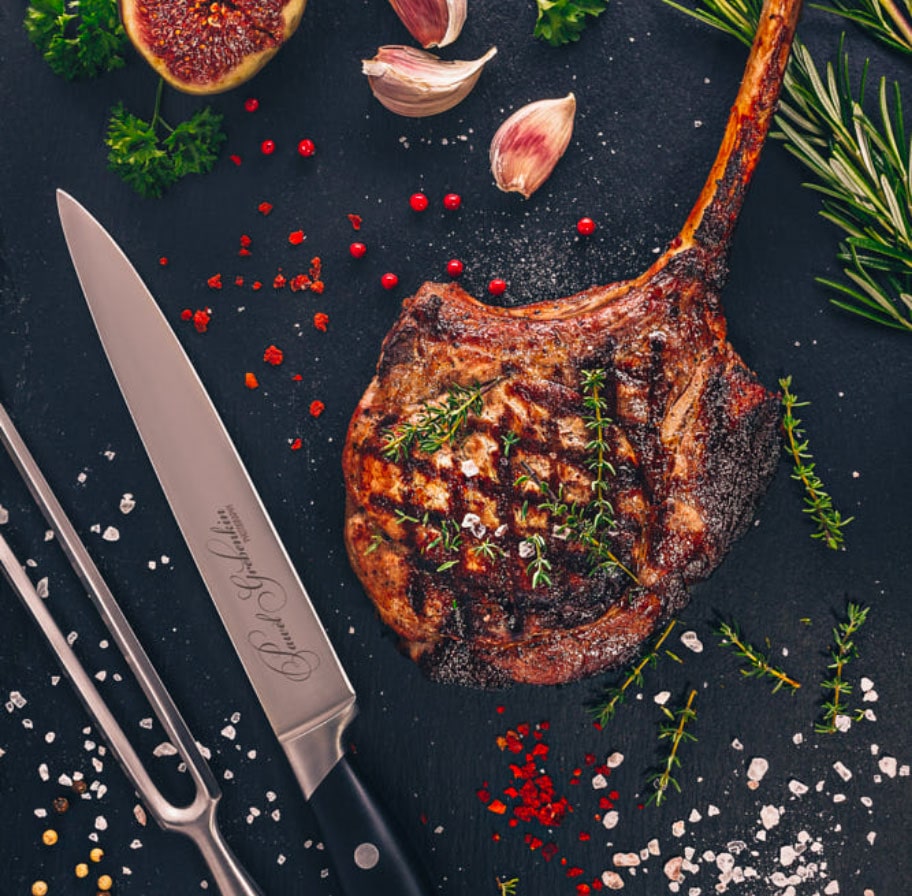
Grilling (Barbecuing)—The technique we call grilling is thought to have originated in the Caribbean, where natives smoke-dried meat over hot coals on wood-frame “grills? Early Spanish explorers called this the “barbacoa” which evolved into the modern-day word “barbecue.”
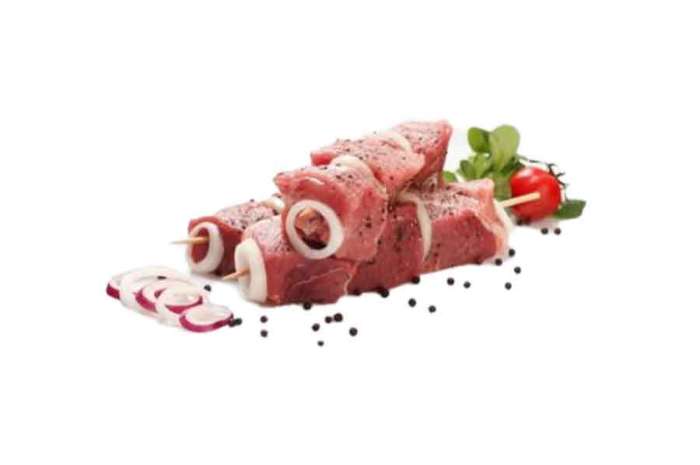
Due to the method of heating, grilling is actually a method of broiling. Meat can be grilled on a grid or rack over coals, heated ceramic briquettes or an open fire. While it is usually done out- doors, grilling can be done in the kitchen with special types of range tops or newer, small appliances.
Standard charcoal briquettes are the most common fuel for grilling. High-quality briquettes burn evenly and consistently. Flammable material for quick-start fires may be added. It takes longer for natural lump charcoal to get hot, but it provides heat for a longer period of time.
Pan-broiling—Pan-broiling is a faster and more convenient method than oven broiling for cooking thinner steaks or chops.
Stir-frying—Stir-frying is similar to panfrying except that the food is stirred almost continuously Cooking is done with high heat, using small or thin pieces of meat.
Deep-fat frying—When meat is cooked immersed in fat, the process is called deep-fat frying. This method is only used with very tender meat. Usually, meat to be deep-fat fried is coated with egg and crumbs or a batter, or it is dredged in flour or corn meal (breaded). This method of cooking is sometimes used for brains, sweetbreads, liver and croquettes; however, a number of other meat products are suitable for deep-fat frying.
Pan-frying—Panfrying differs from pan-broiling in that a small amount of fat is added first, or allowed to accumulate during cooking. Panfrying is a method suitable for ground meat, small or thin cuts of meat, thin strips, and pounded, scored or other- wise tenderized cuts that do not require prolonged heating for tenderization.
Cooking in Liquid—fewer tender cuts of meat can be covered with liquid and gently simmered until tender. Care should be taken not to let the temperature of the liquid exceed 195°F, because boiling (212°F) toughens meat protein. When the liquid is used as a base for soup it is called meat stock (also called broth or bouillon). Meat that is partially cooked in liquid before cooking by another method is called “parboiled.”
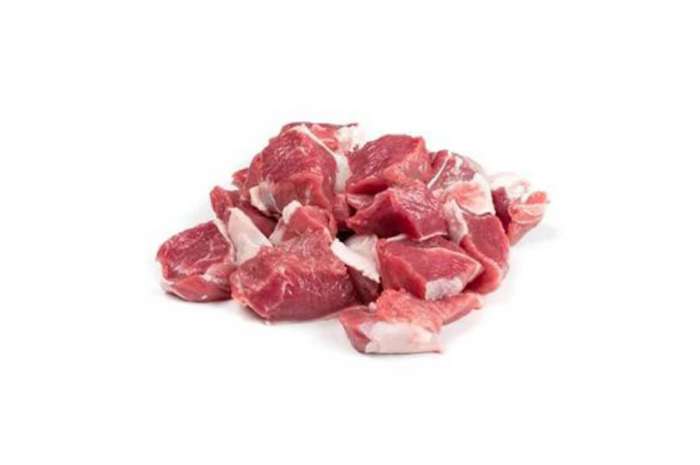
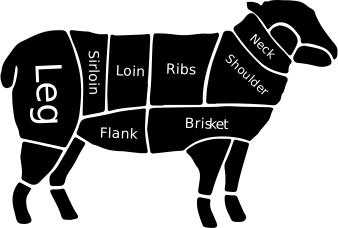
The three ways to cook in liquid are simmering, stewing and poaching. Simmering and stewing are used for less tender cuts of meat while poaching is used for tender cuts. Also, poaching is only appropriate for beef while any type of meat (beef, veal or lamb) can be simmered. The difference between simmering and stewing is that simmering is used with whole cuts of meat while stewing is used with small pieces of meat.
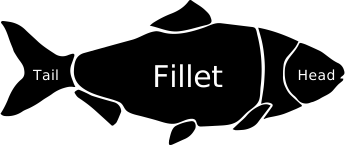
Poaching has been a traditional way of cooking poultry and fish. However, beef roasts can also be successfully poached if they come from tender cuts. Appropriate roasts for poaching are beef eye round, rib eye and tenderloin.
After an initial browning period, the poaching liquid is added and the roast is then gently simmered until it reaches 130°F. A combination of beef broth or consommé and herbs makes a flavorful poaching liquid. After cooking, the liquid can be used to make a simple sauce for the roast or it can be strained and frozen for later use as a soup base or stewing liquid.
Poaching takes one third less time than roasting. (A beef roast will poach to rare in about 20 to 30 minutes).
In addition to cooking more quickly, poaching helps to keep shrinkage of the meat to minimum. A poached beef roast is also just as tender, juicy and flavorful as one which has been conventionally prepared.